Sunday, 14 June 2015

Reflection Post

Gender inequality has always been a huge issue. As our society evolves into further communication and acceptance, gender equality should be getting closer to being true. While efforts are being done constantly to solve this global issue, I think that there is still a long way to go before we can see a significant change. This global issue, no matter who you are, where you live, or what you do, will impact your life. Every person on this earth was assigned a gender at birth. This means that the equality of all genders is everybody’s issue. You, as who you are, have the ability to positively change the current status of gender equality. As I have noted in several blog posts, you do not have to completely change your lifestyle. It is important to find the issues you are passionate about, and fit small actions into your day. These little actions will make people you interact with think about what they are doing different to you. They should be able to see your behaviour on everyday things that society passes off as normal. If you simply stop participating in gender inequality stereotypes, I know that you will see change.

Gender equality, being a world-wide issue, will never be solved in a few days. I think that all of the effort being put in, such as speeches, campaigns, organizations, activists, and little actions, will add up to one big push towards achieving gender equality. I also think that, while society works at all of these ideas, there is something missing. It is possible that these actions are becoming normal, therefore receiving less recognition. Maybe, in addition to current work, we need to create a new approach to solving gender equality issues. If we have a fresh perspective to put out into the world, our message might be more effectively spread. We are missing involvement and interest.

It is the responsibility of everyone to find a solution for gender inequality. Individuals need to make changes in their own lives as well as the people around them for corporations to form and take notice. It is the push from individuals that forms organizations to help with worldwide issues. When more individuals come together,  the voice grows louder, so loud that the government has to address what is happening. I think that the change and the responsibility starts with you, because there are no small roles in achieving equality. The change for gender equality will happen when everyone joins the movement.

Since gender equality has began to become talked about over the past few decades, society has come a long way. More people agree that gender inequality is true, and an issue. For women, their rights have developed from nothing, to on the way of being completely equal to men. The same can not be said for men, however. The men’s rights movement has just begun, and for all genders, there is continuous work to still happen.

Monday, 8 June 2015

Get Involved

Challenges

With a global topic as big as gender equality, there are countless challenges that will occur. Spreading the word about gender equality is one. This requires advocates to go against what is considered normal. Gender equality advocates are struggling every speech, every campaign, every day to show society that there is more to the traditional way of thinking. For as long as we have records, gender inequality has been true. Another challenge is getting everyone involved. There could be 999/1000 people who support gender equality, yet gender equality would not be achieved because there would still be someone who has a different opinion. Possibly, gender equality should not be seen anymore as getting everyone to have to very same thoughts, but getting everyone to first agree that all genders are in-equal. Myself along with most other gender equality advocates agree that on some part, religion is another obstacle to cross. Many religions limit people from acting differently from gender stereotypes. This could possibly be the most difficult challenge gender equality is faced with, simply for the fact that over eighty percent (80%) of the world’s population practices some form of religion.

Canada’s Involvement

When you compare Canada to other countries, Canada is one of the most developed countries for gender equality. Canada is one country that is taking the lead on the gender equality movement. Our nation has thousands of supporters and organizations that are trying to achieve gender equality nationally and globally. Through research, I have found on direct Canadian government websites that Canada’s focus of gender equality is specifically aimed toward giving women equal rights and opportunities as men, with the hopes of having fairness. The Canadian government wants to be sure that women are always a part of ‘decision-making’. This includes political aspects.


How You Can Help and Get Involved

Hopefully, you have began to understand what these two strange words ‘gender equality’ mean when put side by side. I, with much support from the entire gender equality movement, invite you to join us in the fight. We need your help, and you can change the world. Here are some of the simplest, most easy ways you can get involved:

  • take the HeForShe pledge, and encourage your friends, family, and peers to do so as well
  • use your social media platform for change. include hashtags such as #EqualityMonday, or #EverydaySexism to show your support for the United Nations’ and other organization’s work
  • do not participate in everyday gender stereotypes
  • be proud to openly refer to yourself as a feminist, starting the conversation
  • think before you speak

If you try each day to be aware of gender equality issues, you can automatically find ways that fit your own lifestyle to contribute to gender equality. As mentioned before, you do not have to change millions of people’s mind about gender equality; all you need to do is begin with yourself.

My Plan To Help

As I continue with my everyday life, I want to always remember that gender equality is a huge problem today, and will be tomorrow if I don’t do my part to help. I hope to be true to simple ways to help. Spreading my perspective on gender equality has always been one of my main goals through this blog, and I hope to continue sharing my ideas and opinions with people. I know that I still have a long way to go before I can leave an impact, but I want to learn more. My plan to help solve gender inequality is to take in more information. Every way I can, I want to use the information I have access to so that I can learn, talk about what I learn with other people, and keep the conversation going. One of the worst things that could happen now would be if the gender equality movement went dormant because of no interest.

Further Topic History

The tipping point for gender equality began sometime near the end of World War Two. World War Two marked a major turning point for many industries and human rights. I think that this big change started because it became more apparent that something had to change so that there weren’t any reasons for controversy. Women began to stand up for their rights, and started to protest. 1920 marked the year where women were first allowed to vote. We owe this privilege to three women who were some of the first women’s rights and gender equality activists, Elizabeth Cady Stanton, Lucy Stone, and Susan B.Anthony. It has been only recently that men’s rights started to be questioned strongly.


Sunday, 7 June 2015

Who Is Involved Detrimentally?

I think that with gender equality, there are so many ways people can be involved. As mentioned in earlier posts, there are many organizations and people who are fighting for gender equality. On the other hand, there are going to be people who are detrimental to gender equality. This means that these people, whether purposeful or not, are not contributing positively to achieve gender equality.

Some people involved detrimentally could simply be the non-educated. It is unfortunately true that some people have not been and will not be properly educated on reasons why gender equality is necessary and important. For the most part, it is not their fault. They do not know about the issues, therefore they cannot have their own opinion, and they cannot join the movement. This damages the term and the future of gender equality.

A third example of someone who doesn’t help gender equality are the ones that go hand in hand with the earlier example; people who already know about gender equality issues and agree that there is a problem that we need to change,  but who haven’t made any effort to help. I believe that every time someone who is educated decides not to share their opinion or information, no matter their reason, they are certainly not solving the issue. This could be because they are under the impression that there are already advocates out there that are solving the problem. If you are someone who supports gender equality but haven’t done anything to help, I am here to tell you that your help is needed! All people are required to have true gender equality. I am not saying that you have to reach out to millions of people and force everyone into sharing your opinion. I am hoping that in your own life, using your own method that works for you, that you will do your best to inform the people you know. Change starts in your community.

I also strongly believe that people who only support or work to achieve rights for one gender are not helping the issue. There are so many people who think they are doing amazing things for gender equality by calling themselves feminists, but they are only interested in women’s rights. These are the kind of people that give feminism and gender equality activists a ‘bad name’. This is another reason I want gender equality to be achieved, and I want people to know about the problems. I think that if these people who call themselves feminists were to know and fully understand the true meaning of gender equality, the problems they themselves create could be solved.

Monday, 1 June 2015

John Diefenbaker Award


The John Diefenbaker Award was introduced and created by Lawrence Cannon, previous foreign affairs minister, in 2010. Named after a prime minister who worked tirelessly for human rights recognition in Canada and across the world, John Diefenbaker, this award is presented to a person who rightfully honors his legacy. John Diefenbaker is responsible for a large portion of why the Canadian Bill of Rights was passed in 1960. Nominees for the John Diefenbaker award are considered after consulting government partners as well as organizations that are not part of government. To be considered as a nominee, your improvement and/or work for human rights is look at, as well as recommendations. The minister of foreign affairs, who oversees the award, is the one who makes the final decision for the recipient of the award. The 2014 winner of the John Diefenbaker Award was 'Girls Not Brides: The Global Partnership to End Child Marriage'.


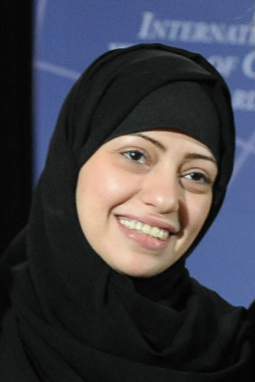
Samar Badawi is a thirty three year old Saudi Arabian woman known for being a human rights - specifically women's rights - activist. Samar was reported to be physically abused for fifteen years by her father. After filing a court case against her father, she in turn had a court case filed against her, by none other than her father, for 'disobeying'. In 2008, Samar left for a women's shelter to get away from her abusive father. For a while, Samar was in prison for these charges pressed by her father. During this time, both cases were investigated. In addition to her several arrests, Samar's father also denied her the right to marriage, one reason she fled for the first women's shelter. In late 2010, Samar was freed from prison and received a new male guardian.


Along with her past of her own issues and experiences, Samar went on to turn her experiences into a lesson and as a benefit for human rights. In the 2011-2012 Women’s Driving Campaign, Samar participated by driving herself, and helping other women drivers to deal with certain procedures. Samar has stood up to many organizations and government boards by filing charges against them for denying her access to things such as a driver’s license, just because she is a girl.


I think that Samar Badawi is deserving of the John Diefenbaker Award. Samar could have chose to abide by her father's rules, and be silent about his abuse. To me, it is important to note that she took the hard path, she rebelled, and she stood up for what she believes in. To people everywhere, Samar Badawi can stand for so much more than someone who makes speeches promoting human rights, she can, and does, stand as a marker that humans are not going to be confined by laws and people that stand in their way of living. Just like John Diefenbaker, I believe that Samar Badawi has improved the human rights movement in her own way. She works and continues to work tirelessly toward a better world. I think that Samar Badawi deserves this award because of her interest shown in change. She has attended United Nations' conferences, speeches, and campaigns. Samar has also, more importantly, improved the human rights of Saudi Arabia. Born in Saudi Arabia, I think that Samar is probably motivated through her knowing of Saudi Arabian issues. She has lived through human rights violations, which makes her a perfect advocate for the John Diefenbaker Award. In my opinion, there isn't anyone better to improve human rights than someone like Samar Badawi who know knows the issues.


Friday, 22 May 2015

Gender Equality


Organizations That Help Gender Equality (Part 2)


HeForShe is a campaign that aims to achieve gender equality. HeForShe was launched September 20th, 2014 by the United Nations. The day included a conference to talk about getting involved in the fight for gender equality. HeForShe describes themselves as having one half of the world’s population fighting for the other half, to benefit everyone.

The ‘HeForShe’ commitment is a pledge that men can take on the HeForShe homepage
( http://www.heforshe.org/ ) that states that they understand that gender equality is not only a women’s issue, and that we need everyone to take part in this. Currently, more than 300 000 men have taken the pledge across the world.

I am fully in support of the HeForShe campaign. Since its beginning, I have been talking about the conference with people I know, and spreading the campaign. My attention to this movement was first caught when I came across a video that included one of my favorite people, Emma Watson. Emma Watson spoke at the campaign launch as the UN Women’s Goodwill Ambassador, and she spoke her fifteen minute speech without me once disagreeing with her. I am sure that, if you take the time to watch this life-changing video, you will be able to begin to see why, and how, I am so passionate about gender equality.


In the speech, a few key things talked about are:

  • Gender equality is not just a women’s issue, and we need the help of as many men and boys as possible.
  • Gender equality shouldn’t just be talked about, we should make sure that it will last.
  • Feminism and how so many people see it as man-hating. Many people are ‘afraid’ of the word, but it shouldn’t be the word that matters, it should be the idea and the drive behind it to make a change.
  • Gender based assumptions.
  • There is no country anywhere in the world where all women can expect to have their human rights.
  • How can we have change when only half of the population are welcome in the conversation?
  • When men are free from male stereotypes, there will be a natural consequence and everybody (men and women)  will see change.
  • “If not me, who? If not now, when?”

Also within Emma’s speech, she introduced some staggering facts that will be true if we do not make the change, and make gender equality a true, tangible thing.

  • If we do nothing, it will take seventy-five (75) years before women will be payed the same as men.
  • 15.5 million girls will be married as children in the sixteen (16) years.
  • It will be the year 2086 before all rural African girls can have a secondary education.


HeForShe is a relatively new organization that is a push in the right direction. Since its launch, it has reached out to so many people across the world. As of now, Canada has 15 571 men who have signed the pledge. I think that even though this is a relatively small number in perspective, it is also a great number. This number tells people that although we are working hard, we do not have everyone participating, and we still have a long way to go.


Organizations That Help Gender Equality (Part 1)


The International Women’s Rights Action Watch (IWRAW) began in 1985 in Kenya at a conference talking about women’s rights. The IWRAW operates as a non-governmental organization that aims to promote the recognition of women’s rights, including how they are being acknowledged and not acknowledged. They talk about the discrimination of women, for example in some parts of the world, non-equal pay for men and women. They believe that females are needed for development. Without females, there is only half of the population working for a better world, and only half of the population participating in society. The NGO is international, working across the world, and started as multiple NGOs and activists who wanted to see change. 

The IWRAW is educating people by having conferences and group discussions about the violations of women’s rights. Basically, they are spreading their side so people can make their own decision to become activists. The IWRAW is, in my opinion, keeping the conversation going so that this issue is not forgotten about. This organization is fighting for equality and women’s rights, therefore they see the issue, which personally shows me that there are still people who believe in what I see as rights that should be available for everyone.